

12 Essential Bedroom Producer Tips for After-Work Productivity

Coming home after eight hours at your day job, the last thing you want to do is stare at another screen. But here we are. That’s exactly what we bedroom producers need to do to chase our musical dreams. I’ve been juggling my 9-to-5 with music production for years now. Honestly, it’s exhausting sometimes. But I’ve learned that staying productive as a bedroom producer requires specific strategies that most tutorials never mention.
These bedroom producer tips aren’t about fancy gear or complex techniques. They’re about maximizing your limited time and energy after work. Whether you’re crafting lofi beats in your spare bedroom or laying down bedroom pop tracks in your living room, these strategies will help you maintain consistent progress without burning out. Let me share what I’ve discovered through countless late nights and early mornings in my home studio. Some of these insights came from pure exhaustion — others from those magical moments when everything just clicks.
Throughout this guide, you’ll learn how to optimize your music production workflow. You’ll discover efficient systems that work around your schedule. Plus, you’ll maintain creative momentum even when you’re completely drained. I’ll also share some insights from recent industry developments that could change how we approach lofi production setup in 2026. Trust me, some of this stuff has been game-changing for my own workflow.
1. Create a 15-Minute Transition Ritual
Affiliate Disclosure: This article contains affiliate links. If you make a purchase through these links, we may earn a commission at no extra cost to you. This helps support Widen Island and allows us to keep creating content.
The biggest mistake I see bedroom producers make is jumping straight from work mode into creative mode. Your brain needs time to switch gears. I learned this the hard way after spending too many evenings staring at Logic Pro with zero inspiration. Therefore, I developed a simple 15-minute ritual that signals to my mind that it’s time for music.
First, I change into comfortable clothes. Something as simple as swapping my work shirt for a hoodie makes a huge difference. Then, I make a cup of tea and listen to one or two tracks that inspire me. Usually something from The Deli or Nujabes or maybe some recent Chillhop Music releases. Finally, I spend five minutes organizing my desk and checking that all my gear is ready. This routine might seem trivial, but it’s transformed how quickly I can access my creative headspace.
Moreover, this ritual helps separate your producer identity from your day job identity. Many successful bedroom producers I know have similar routines. MYR, my main solo project, mentioned in my own interview that I always light a specific candle before starting my sessions. The scent becomes a creative trigger. The key is consistency; your brain will start anticipating creative time once you establish this pattern. It’s like Pavlov’s bell, but for beats.

2. Master the Art of Micro-Sessions
Forget the myth that you need four-hour blocks to make meaningful progress. Seriously. Some of my best tracks came from 30-minute sessions after work. The secret lies in having clear, achievable goals for each micro-session. You know that feeling when you sit down with unlimited time and somehow accomplish nothing? Yeah, micro-sessions fix that.
For instance, Monday might be “drums only” night where I focus solely on programming a solid foundation. Tuesday could be “melody exploration” where I experiment with different chord progressions in Logic Pro. I’ll load up Vintage Vibes or maybe mess around with some detuned piano samples. Wednesday might be dedicated to sound design or finding the perfect vinyl crackle sample. This approach prevents decision paralysis and ensures steady progress.
Additionally, micro-sessions work because they align with your post-work energy levels. You’re not trying to force creativity when you’re mentally drained. Instead, you’re channeling whatever energy you have into focused, specific tasks. This is especially effective for lofi production setup workflows, where subtle details matter more than complex arrangements. Sometimes I’ll spend an entire session just getting the hi-hats to sit perfectly behind the kick.
Setting Up Your Micro-Session Templates
To make micro-sessions work, preparation is crucial. I keep several Logic Pro templates ready for different types of sessions. My “Quick Drums” template has my favorite drum samples already loaded with basic processing — usually some gentle compression and EQ. My “Chord Exploration” template includes a few vintage synths and my go-to reverb settings. ChromaVerb’s Vintage setting with about 2.1 seconds decay time is my sweet spot.
Furthermore, I maintain a running list of session ideas in my phone’s notes app. Whenever inspiration strikes during the day, I jot it down. “Try that bass line from the coffee shop song.” “Sample the rain from this morning.” This way, I never waste precious evening time wondering what to work on. The goal is to eliminate friction between sitting down and making music. Every second counts when you’re working with limited time.

3. Optimize Your Home Studio Productivity with Smart Gear Choices
Your equipment choices dramatically impact how to make music after work efficiently. I learned this lesson the hard way after spending countless evenings troubleshooting gear instead of creating. Nothing kills the vibe like a driver issue or a plugin that won’t load. The key is choosing reliable, simple tools that get out of your way.
Start with a solid audio interface that handles your needs without complexity. I use a simple two-input interface because most of my work happens in the box. The Focusrite Scarlett series has been rock-solid for me. Avoid the temptation to buy gear that requires steep learning curves unless you have dedicated time to master it. Remember, you’re trying to maximize limited creative time, not become a gear expert.
Similarly, invest in quality monitoring that you can trust at low volumes. Neighbors and roommates don’t appreciate loud music at 10 PM. So your headphones become crucial for late-night sessions. Good monitors help you make better mixing decisions faster, which is essential when you only have an hour to work. I’ve been using the same pair of Sony MDR-7506s for three years now — they’re not the most exciting cans, but they’re consistent.
The “One-Touch” Setup Philosophy
Everything in your studio should be accessible with minimal setup time. My MIDI controller stays connected and ready. My audio interface never gets turned off. My headphones hang on a dedicated hook right next to my monitor. This might seem obsessive, but when you’re tired after work, even small obstacles can derail your creative momentum.
Also, consider cable management as part of your productivity strategy. I spent a weekend organizing all my cables with velcro ties and labels. Now I can troubleshoot connection issues in seconds rather than minutes. These small investments in organization pay huge dividends during actual creative sessions.

4. Develop a Consistent Music Production Workflow
Successful bedroom producers follow predictable workflows that eliminate decision fatigue. After experimenting with various approaches, I settled on a system that works regardless of how tired I am after work. This consistency is one of the most important bedroom producer tips I can share. It’s like having autopilot for your creativity.
My workflow always starts with drums. I spend the first 10 minutes getting a groove that feels right, even if it’s simple. Next, I add bass — usually just following the kick pattern with subtle variations. Then comes the harmonic foundation with chords or a simple melody. Finally, I add texture elements like vinyl crackle, ambient sounds, or filtered vocal samples. The order matters because each element informs the next.
This approach works because it mirrors how most lofi tracks are structured. More importantly, it gives me a roadmap when my creative brain isn’t firing on all cylinders. I can follow the process mechanically and still end up with something musical. Our beginner’s guide to lofi beats covers similar workflow concepts in more detail. Sometimes structure is what sets creativity free.
Building Your Personal Production Checklist
Create a simple checklist for each stage of your workflow. Mine includes items like “Does the kick hit at 60Hz?” and “Are the hi-hats sitting behind the snare in the mix?” These reminders help maintain quality when you’re working quickly or feeling uninspired. I keep this checklist as a text file on my desktop for quick reference.
Also, establish clear stopping points for each session. I always export a rough bounce before closing Logic Pro, even if the track isn’t finished. This lets me listen back during my commute the next day and plan the next session. It’s amazing how different your music sounds on different playback systems — use this to your advantage. Car speakers reveal mix problems that studio monitors miss.

5. Leverage Industry Tools and Recent Developments
The bedroom production landscape keeps evolving, and staying informed helps you work more efficiently. Recently, Bedroom Producers Blog covered several free plugins that could streamline your workflow. For example, the new epicVerb mkII offers professional-quality reverb without the CPU hit of more complex plugins. I’ve been testing it on my older MacBook Pro and it’s been surprisingly gentle on system resources.
Additionally, MusicRadar recently highlighted how producers like PinkPantheress work with established artists to develop their sound. This shows that bedroom producers can maintain their DIY aesthetic while learning from industry professionals. The key is finding tools and techniques that enhance your creativity without overwhelming your limited time. You don’t need to adopt every new trend — just the ones that solve real problems in your workflow.
Furthermore, keeping up with plugin deals can significantly impact your budget. That Roland TB-303 plugin deal mentioned in recent industry news could be perfect for adding authentic acid house elements to your lofi tracks. However, only invest in new tools if they solve specific problems in your current workflow. I learned this after buying way too many synth plugins that I never actually use in finished tracks.
Staying Connected Without Information Overload
Subscribe to a few key sources rather than trying to follow everything. I check Bedroom Producers Blog weekly and skim through a couple of producer-focused YouTube channels during lunch breaks. The goal is staying informed without getting distracted by every new release or technique. Focus on developments that directly impact lofi and chillhop production.
Also, join producer Discord servers where people share real-time discoveries and deals. The Widen Island community often shares great finds that save both time and money. Sometimes the best insights come from fellow bedroom producers rather than industry publications.

6. Master the Power Nap Strategy
Here’s a bedroom producer tip that sounds counterintuitive: sometimes the best thing you can do for your music is sleep for 20 minutes. I discovered this accidentally when I dozed off at my desk after a particularly draining workday. When I woke up, my ears were fresh and I immediately heard problems in my mix that I’d missed earlier. It was like someone had cleaned my monitors.
Power naps reset your auditory perception and creative energy. If you get home exhausted, set a timer for 20 minutes and rest. You’ll wake up more focused and productive than if you’d forced yourself to work through the fatigue. This is especially valuable for mixing and arrangement decisions that require careful listening. Your ears need rest just like any other part of your body.
However, timing matters. Nap too long and you’ll feel groggy. Nap too late and you’ll struggle to sleep at night. I’ve found that a 20-minute rest immediately after arriving home works perfectly. It creates a natural transition between work and music time while recharging your creative batteries. I use a gentle alarm tone — nothing jarring that might affect my mood for the evening session.
The Science Behind Creative Rest
Research shows that brief rest periods help consolidate information and reset attention spans. For producers, this means better pattern recognition and improved critical listening skills. I’ve noticed that complex mixing decisions become clearer after a short rest. It’s not laziness — it’s strategic recovery.
Create a comfortable nap environment in your studio space. I keep a small pillow and light blanket nearby. Dim the lights and set your phone to airplane mode. These 20 minutes aren’t just rest — they’re an investment in the quality of your evening session.
7. Create a Weekly Production Schedule
Random creativity sessions lead to random results. Instead, establish a weekly schedule that aligns with your energy levels and life commitments. Monday might be your “fresh start” day for beginning new tracks. Wednesday could be your “mixing night” when you refine existing work. Friday might be reserved for experimentation and sound design. I find that different days suit different types of creative work.
This scheduling approach helps your brain prepare for different types of creative work. It also ensures you’re making progress on multiple fronts instead of getting stuck on one track for weeks. Many successful bedroom producers I know follow similar systems, adapting them to their specific circumstances and goals. The structure provides freedom by eliminating decision fatigue.
Moreover, having a schedule makes it easier to say no to other commitments. When friends invite you out on your designated music nights, you have a clear reason to decline or suggest alternative times. Protecting your creative time is essential for long-term progress as a bedroom producer. People respect consistency when they see you’re serious about your craft.
Adapting Your Schedule to Real Life
Life happens, and rigid schedules often break under pressure. Build flexibility into your system by having backup plans. If you miss your Monday “new track” session, maybe Tuesday becomes a hybrid day where you start something new but keep it simple. The goal is consistency over perfection. I aim for 80% adherence to my schedule rather than 100%.
Also, consider seasonal adjustments to your schedule. Winter months might favor introspective mixing sessions, while summer evenings could be perfect for recording acoustic elements or field recordings. Your music production workflow should evolve with your life circumstances. I’ve learned to work with my natural rhythms rather than against them.
8. Use Reference Tracks Strategically
When you’re tired after work, your critical listening skills aren’t at their peak. This is where reference tracks become invaluable. I keep a playlist of 10-15 professionally mixed lofi tracks that represent the sound I’m aiming for. These serve as North Stars when my ears can’t be trusted. Artists like Jinsang, Idealism, and Kupla are regular fixtures in my reference collection.
Choose references that match your intended vibe and energy level. A chill Sunday morning track won’t help you mix an upbeat bedroom pop song. Similarly, pick tracks that were mixed for similar playback systems. Most lofi music is designed for streaming and headphone listening, not club sound systems. This context matters when you’re making EQ and compression decisions.
Additionally, use references at different stages of production. During the arrangement, focus on how professional tracks build and develop. During mixing, compare frequency balance and stereo width. During the final stages, check overall loudness and dynamic range. Artists like GaetDown often mention specific tracks that influenced their production decisions. Learning from finished works accelerates your own development.
Building Your Reference Library
Organize your references by mood, tempo, and production style. I have separate playlists for “Chill Evening Vibes,” “Upbeat Morning Tracks,” and “Experimental Textures.” This organization helps me quickly find appropriate references for whatever I’m working on. Include notes about what specifically you admire in each track — the drum sound, the bass tone, the overall atmosphere.
Update your reference library regularly as you discover new music and as your own style evolves. What inspired you six months ago might not be relevant to your current direction. I refresh about 20% of my references each month to keep my ears exposed to fresh ideas and production techniques.
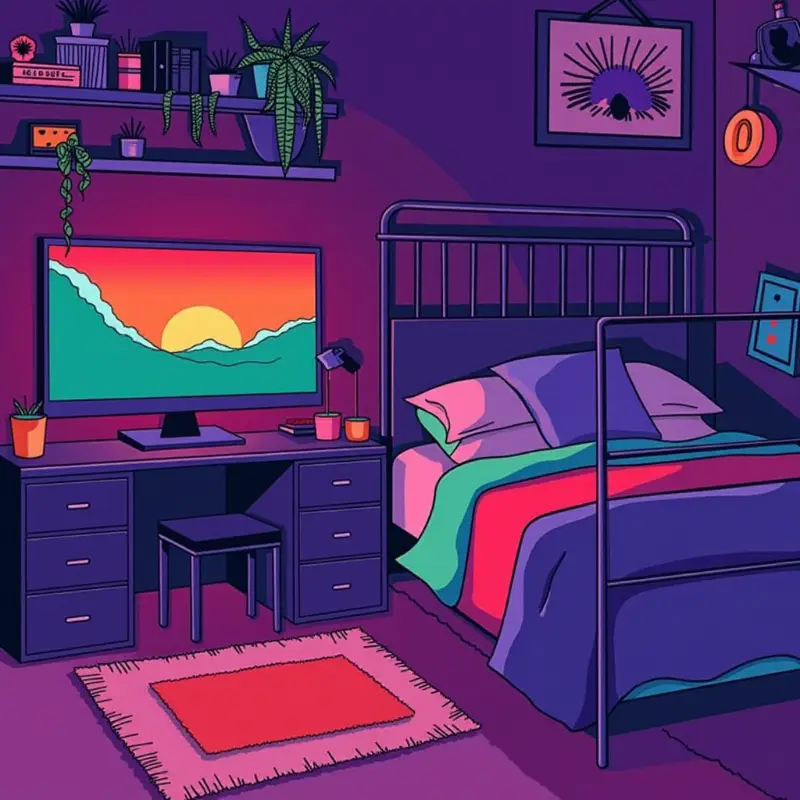
9. Embrace the “Good Enough” Philosophy
Perfectionism kills more bedroom producer projects than any technical limitation. After working all day, you don’t have the mental energy for endless tweaking and second-guessing. Instead, embrace “good enough” as a creative strategy, not a compromise. I used to spend entire sessions moving a snare hit by 5ms increments. Total waste of creative energy.
Set clear completion criteria for each element in your track. For example, “drums are done when they groove and sit well in the mix.” Once you hit that mark, move on. This prevents you from spending an entire session adjusting hi-hat levels by 0.5dB increments while neglecting other important elements. The whole track matters more than perfect individual parts.
Furthermore, remember that lofi aesthetics actually benefit from imperfection. That slightly off-time snare hit or the subtle pitch drift in your bass line might be exactly what gives your track character. Many of the most beloved lofi tracks have technical “flaws” that make them more human and relatable. J Dilla’s timing imperfections became his signature sound.
Setting Healthy Boundaries with Your Work
Learn to recognize when you’re improving versus when you’re just changing things. If you’ve been tweaking the same element for 30 minutes without clear progress, it’s time to move on. I set a timer for focused work sessions — 25 minutes maximum on any single element. This forces decisive action rather than endless exploration.
Also, practice finishing tracks even when they don’t feel perfect. Completion teaches you more than endless revision. I have a rule: every track gets exported and saved as “final” after a reasonable amount of work. Some of my most popular releases were tracks I initially considered “good enough” rather than masterpieces.
10. Build a Sample Library During Downtime
One of the best bedroom producer tips I can share is building your sample library during low-energy periods. When you’re too tired for serious composition work, spend time organizing and categorizing samples. This preparation pays dividends during high-energy creative sessions. Think of it as sharpening your tools for when inspiration strikes.
Create folders for different moods, tempos, and instruments. Tag samples with descriptive keywords that make sense to your tired brain. Instead of “Kick_047.wav,” name it “Kick_Punchy_90BPM.wav.” Future you will appreciate the clarity when you’re trying to find the perfect element for your track. I learned this after spending 20 minutes searching for “that one kick” I knew was somewhere in my library.
Also, record your own samples during these organizational sessions. Tap out rhythms on your desk, hum melodies into your phone, or record ambient sounds from your environment. These personal elements often become the most interesting parts of your tracks because they’re uniquely yours. The coffee shop ambience I recorded last month ended up in three different tracks.
Smart Sample Organization Systems
Develop a consistent naming convention that includes tempo, key, and mood information. I use the format “Instrument_Mood_Key_BPM” for all my samples. This makes searching much faster when you’re in creative flow. Also, create “inspiration” folders with samples that spark immediate ideas, even if you don’t use them right away.
Consider using sample management software like ADSR Sample Manager or even simple spreadsheets to track your library. Include notes about where samples came from and what tracks you’ve used them in. This prevents accidentally reusing the same elements and helps you discover forgotten gems in your collection.
11. Connect with the Bedroom Producer Community
Working alone in your bedroom can feel isolating, especially after long workdays. However, connecting with other bedroom producers provides motivation, feedback, and fresh perspectives on your music. The community aspect often gets overlooked in technical tutorials, but it’s crucial for long-term success. Some of my best creative breakthroughs came from conversations with fellow producers.
Join online forums, Discord servers, or local meetups where bedroom producers share their work and experiences. Many successful lofi labels started as communities of bedroom producers supporting each other’s growth. You don’t need to be the most skilled producer to contribute — enthusiasm and constructive feedback are equally valuable. The Widen Island Discord has become like a second family to me.
Moreover, community connections can lead to collaboration opportunities that push your music in new directions. Some of my favorite tracks came from late-night collaboration sessions with other producers who brought different skills and perspectives to the table. These partnerships often happen naturally when you’re actively engaged with the community. Magic happens when creative minds connect.
Finding Your Tribe Online and Offline
Start by engaging authentically with producers whose music you genuinely appreciate. Comment thoughtfully on their tracks, share their work when appropriate, and offer specific feedback rather than generic praise. This approach builds real relationships rather than superficial networking connections. People can tell when you’re genuinely interested versus just promoting yourself.
Additionally, consider starting or joining a weekly feedback group where members share works-in-progress. These sessions provide accountability and fresh ears for your music. They also help you develop critical listening skills by analyzing other producers’ work. I participate in a weekly feedback session every Thursday evening — it’s become one of my favorite parts of the week.
12. Plan Your Release Strategy from Day One
Many bedroom producers create music without thinking about how they’ll share it with the world. This lack of planning leads to hard drives full of unreleased tracks and missed opportunities. Instead, develop a simple release strategy that works with your after-work schedule. I used to be guilty of this — hundreds of unfinished ideas with no clear path to completion.
Start by setting realistic goals. Maybe you want to release one track every two months, or perhaps you’re working toward a four-track EP. Having clear targets helps you prioritize which projects to finish versus which ones to shelve for later. This focus is essential when your creative time is limited. I aim for one solid release per quarter — it’s achievable without being overwhelming.
Furthermore, research platforms and labels that align with your sound before you finish your tracks. Submit your music to Widen Island, which genuinely supports bedroom producers rather than blasting your demos everywhere. Quality submissions to appropriate outlets yield better results than quantity-based approaches. I keep a spreadsheet of labels that match my style and their submission preferences.
Also, consider the administrative side of releasing music. Set up your streaming accounts, understand basic copyright concepts, and learn about royalty collection. These tasks are perfect for low-energy evenings when you’re too tired for creative work but still want to advance your music career. Treat the business side as seriously as the creative side — both are necessary for success.
Creating a Sustainable Release Schedule
Work backward from your release goals to create production deadlines. If you want to release quarterly, you need to finish tracks 4-6 weeks before your target date to allow for mastering, artwork, and promotion. Build buffer time into your schedule because life inevitably interferes with creative plans. I learned this after missing several self-imposed deadlines.
Also, batch similar tasks together for efficiency. Spend one evening creating artwork for multiple releases. Dedicate another session to writing all your track descriptions and metadata. This approach minimizes context switching and makes the administrative work feel less overwhelming. The key is treating release preparation as part of the creative process, not a separate burden.
13. Optimize Your Physical Environment for Evening Sessions
Your physical environment dramatically affects your creative output, especially during evening sessions when you’re already tired. I’ve learned that small environmental tweaks can make the difference between a productive session and staring blankly at your DAW. Lighting is particularly crucial — harsh overhead lights kill the creative mood, while complete darkness makes you sleepy.
I use warm LED strips behind my monitor and a small desk lamp with adjustable brightness. This creates a cozy atmosphere that feels separate from the rest of my living space. Temperature matters too — I keep my studio slightly cooler than the rest of my apartment because creative work generates body heat. Air quality is another factor people overlook. A small air purifier or even just opening a window can improve focus and energy levels.
Consider aromatherapy as part of your environment optimization. Certain scents can enhance creativity and focus. I diffuse peppermint oil during mixing sessions and lavender during more meditative composition work. These sensory cues help your brain shift into different creative modes. It might sound new-age, but the science behind scent and cognitive performance is solid.
Ergonomics for Long-Term Health
Don’t neglect your physical health for the sake of productivity. Invest in a decent chair and position your monitors at eye level. I spent years hunched over my laptop and developed serious neck problems. Now I use a laptop stand and external keyboard — game changer for comfort during long sessions.
Take regular breaks to stretch and move around. Set a timer for every 45 minutes to remind yourself to stand up and walk around. These breaks actually improve creativity by giving your subconscious time to process ideas. Plus, your back will thank you after years of consistent music-making.
14. Develop Your Unique Sound Through Intentional Listening
Finding your unique voice as a bedroom producer requires intentional listening practices that go beyond casual music consumption. I dedicate 15 minutes before each session to active listening — really focusing on one track and analyzing what makes it work. This isn’t background music; it’s study material. I take notes on arrangement choices, sound selection, and production techniques.
Create listening sessions focused on specific elements. One evening might be dedicated to studying bass lines in different lofi tracks. Another session could focus on how different producers use reverb and space. This targeted approach helps you internalize production concepts faster than random listening. I keep a notebook specifically for these observations — it’s become an invaluable reference.
Also, listen to music outside your genre regularly. Jazz, ambient, classical, and even electronic dance music can provide fresh perspectives on rhythm, harmony, and arrangement. Some of my most interesting production ideas came from applying techniques I heard in completely different styles of music. Cross-pollination is where innovation happens.
Building a Diverse Musical Vocabulary
Challenge yourself to identify and recreate specific sounds you admire. If you love the way a particular producer processes their drums, spend a session trying to achieve something similar. This reverse-engineering approach teaches you production techniques while developing your ear. Don’t worry about copying — you’ll naturally add your own spin to everything you learn.
Keep a “sound inspiration” playlist that you update regularly. Include tracks that represent different moods, production styles, and creative approaches you want to explore. This becomes a creative resource when you’re feeling stuck or uninspired. Sometimes the solution to a production problem lies in a completely different track you heard months ago
Conclusion
Finding Your Rhythm After the 9-to-5
Balancing a career with a serious music habit isn’t easy, but it’s exactly how some of the most iconic lofi and bedroom pop tracks of our time were born. It’s not about having a sprawling studio or endless free time; it’s about protecting your energy and being intentional with the minutes you do have.
By implementing these rituals—from the 15-minute transition to the “good enough” philosophy—you’re doing more than just making beats; you’re building a sustainable creative life. Remember, the goal isn’t to replace your sleep with stress, but to let your music be the sanctuary it’s meant to be. So, tonight, when you close your laptop and head to your gear, take a breath, light that candle, and just start. Your next favorite track is waiting for you to clock in.
/Edwin


